

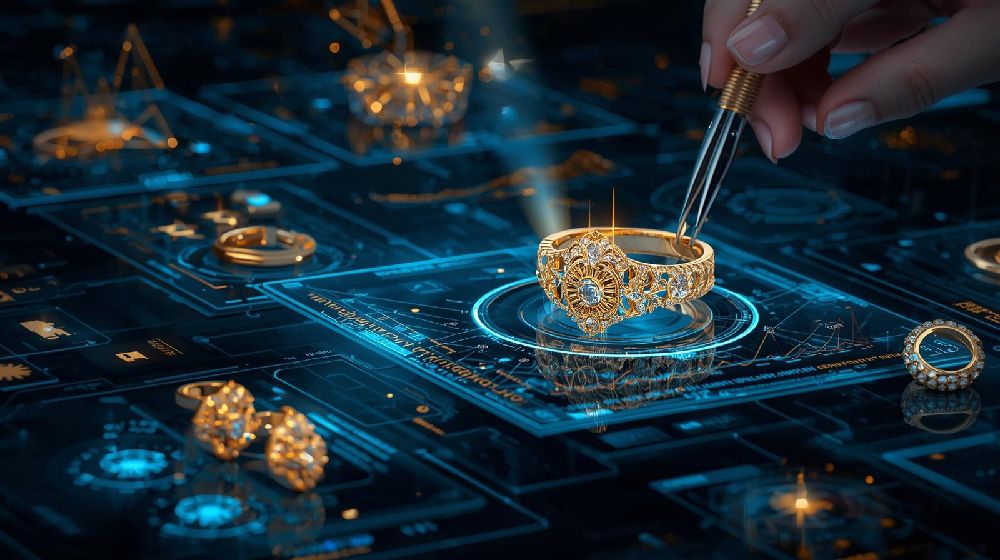
The world of gold jewelry is evolving. Beyond artistry and tradition, data-driven production is revolutionizing how jewelry is designed, manufactured, and experienced. By integrating advanced analytics, precision technology, and intelligent workflows, jewelry brands are setting new standards for quality, efficiency, and sustainability.
The Role of Data in Modern Jewelry
Data-driven production uses real-time insights, analytics, and precision measurements to guide every stage of jewelry creation. From initial design to final finishing, data ensures that each piece meets exacting standards, reduces errors, and maximizes resource use.
This approach is especially impactful in gold jewelry, where precision, durability, and material efficiency are critical.
Precision That Reduces Waste
Traditional jewelry production often involves trimming, casting errors, and material loss. Data-driven techniques, including CNC machining, 3D modeling, and AI-assisted design, allow jewelers to calculate exact dimensions and material requirements before production begins.
The result? Minimal waste, optimized gold usage, and more sustainable practices—all without compromising design quality.
Enhanced Quality Control
By integrating sensors, software, and analytics, manufacturers can monitor thickness, weight, and symmetry throughout production. Data ensures uniformity in every piece, reducing defects and the need for remakes. Customers receive jewelry that is not only beautiful but also consistently precise.
Customization Meets Scalability
Data-driven production allows brands to offer personalization at scale. Whether it’s engraving, sizing, or bespoke designs, precise measurements and digital workflows make customization efficient and accurate. This bridges the gap between luxury craftsmanship and mass accessibility.
Predictive Maintenance and Process Optimization
Data analytics also optimize production machinery. By monitoring wear, performance, and efficiency, manufacturers can predict maintenance needs, reduce downtime, and maintain consistent output quality. This improves reliability while keeping costs and material usage in check.
Sustainable Gold Practices
Beyond efficiency, data-driven production promotes responsible gold usage. Accurate modeling reduces scrap, and real-time tracking ensures precious metals are fully utilized and recycled. This aligns with the growing demand for eco-conscious jewelry without compromising luxury or design.
Redefining Customer Expectations
Modern consumers expect transparency, quality, and sustainability. Data-driven gold jewelry production allows brands to meet these expectations with confidence. Customers receive pieces that are precise, durable, beautiful, and ethically crafted.
Final Thoughts
Data-driven production is not just a technological upgrade—it’s a redefinition of gold jewelry standards. It blends craftsmanship, innovation, and sustainability to create pieces that shine in design, durability, and responsible production.
For jewelry brands embracing this approach, every piece tells a story of precision, beauty, and intelligent innovation—setting a new benchmark for modern luxury.