

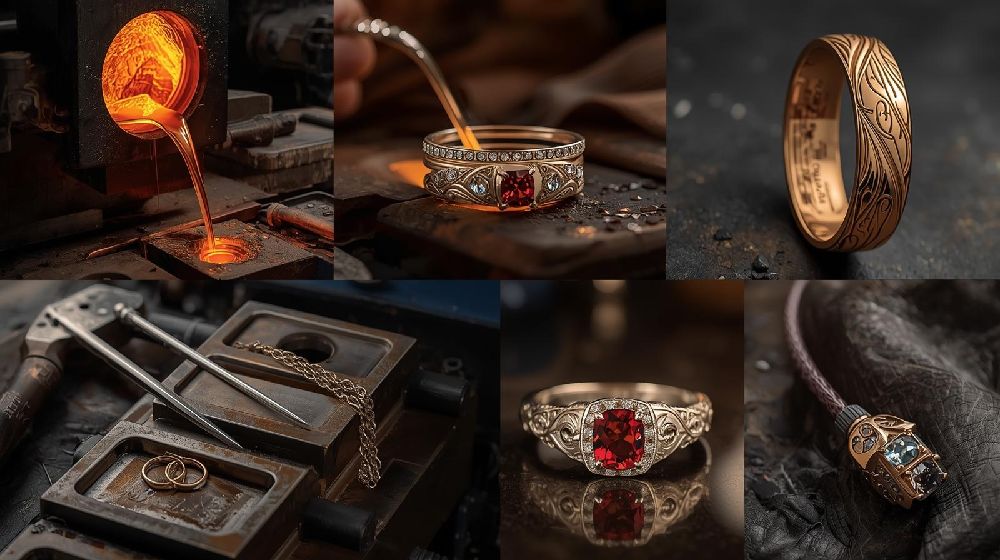
Behind every beautifully crafted piece of fine jewelry lies a process that blends art, science, and centuries-old tradition—the art of casting. While jewelry may appear effortless in its elegance, its creation is the result of careful planning, skilled craftsmanship, and precise technique. Casting is the moment where imagination becomes reality, transforming raw metal into wearable art.
From Idea to Form: The Beginning of Casting
The journey begins with a design. Whether hand-sketched or digitally modeled using CAD software, the design defines every curve, detail, and proportion of the final piece. This blueprint ensures that the jewelry is not only visually stunning but also structurally sound.
Once finalized, the design is translated into a wax model, an exact replica of the intended piece. Wax is chosen for its flexibility, allowing artisans to refine even the most intricate details before metal ever enters the process.
The Lost-Wax Casting Method
Fine jewelry is most commonly created using the lost-wax casting process, a technique refined over thousands of years.
The wax model is encased in a heat-resistant investment material that hardens to form a mold. When heated, the wax melts away, leaving a hollow cavity that mirrors the original design. Molten gold or precious metal is then carefully poured into this space, capturing every detail with remarkable precision.
This step is where craftsmanship and control matter most—temperature, timing, and metal flow all influence the final outcome.
Cooling, Revealing, and Refining
Once the metal cools and solidifies, the mold is broken to reveal the rough jewelry form. At this stage, the piece holds its shape but lacks refinement. Skilled artisans then begin the finishing process, removing excess metal, refining edges, and preparing the surface.
This phase requires patience and expertise, as even the smallest adjustment can affect the integrity of the design.
Elevating Craftsmanship Through Technology
Modern fine jewelry casting often combines tradition with innovation. Advanced techniques such as vacuum casting, centrifugal casting, CNC refinement, and laser welding enhance precision and consistency while preserving artistic freedom.
These technologies allow jewelers to achieve complex geometries, delicate structures, and lightweight designs that were once impossible, all while maintaining strength and durability.
Finishing Touches: Where Beauty Emerges
Polishing, texturing, stone setting, and final quality checks bring the jewelry to life. These finishing steps enhance brilliance, comfort, and longevity, ensuring each piece is both beautiful and wearable.
Every surface is carefully inspected, ensuring the piece meets the highest standards of fine jewelry craftsmanship.
Conclusion
Casting is more than a manufacturing process—it is the heart of fine jewelry creation. It is where creativity meets discipline, where molten metal captures imagination, and where craftsmanship turns vision into reality. Each cast piece carries a story of precision, patience, and artistry, reminding us that true luxury is not just seen—it is meticulously crafted.