

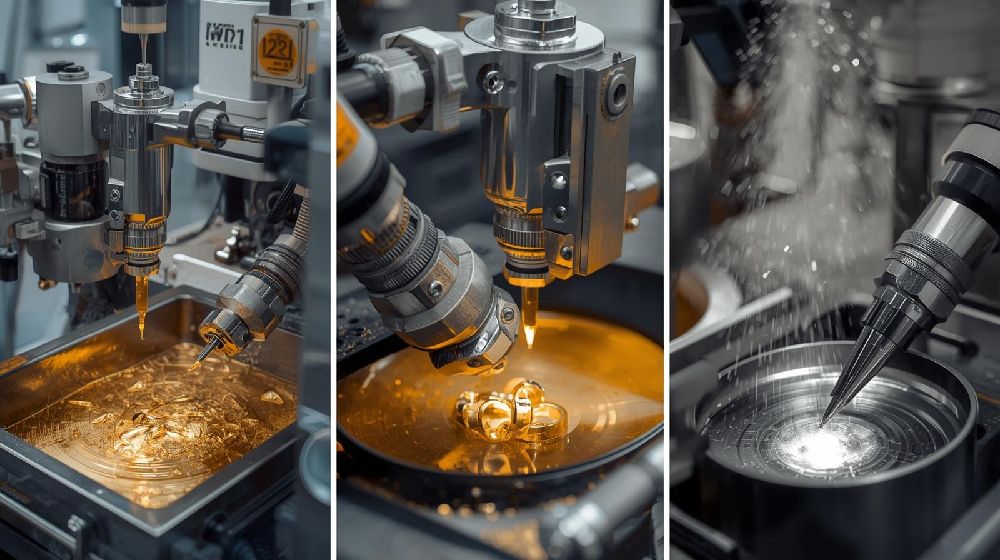
In modern jewelry manufacturing, surface coatings play a crucial role in enhancing appearance, durability, and affordability. Techniques like gold plating, vermeil, and rhodium coating allow jewelry brands to achieve luxurious finishes while meeting diverse market needs. Understanding how these coatings are applied helps buyers appreciate the craftsmanship and make informed purchasing decisions.
What Are Jewelry Coatings?
Jewelry coatings involve applying a thin layer of precious metal over a base material. This process improves shine, color, corrosion resistance, and wearability, especially in fashion and demi-fine jewelry.
Gold Plating: The Foundation Technique
Gold plating involves depositing a thin layer of gold onto a base metal such as brass, copper, or sterling silver.
How It’s Applied:
-
The jewelry is thoroughly cleaned to remove oils, dust, and oxidation.
-
It is submerged in an electrolytic solution containing gold ions.
-
An electric current causes gold particles to bond to the surface.
-
Thickness typically ranges from 0.1 to 2.5 microns depending on quality.
Key Benefits:
-
Creates a gold appearance at a lower cost
-
Allows for trendy designs and frequent style updates
Vermeil: Premium Gold Over Silver
Vermeil is a higher-quality form of gold plating where sterling silver is used as the base metal, and a thicker layer of gold is applied.
Production Process:
-
Sterling silver is polished and cleaned thoroughly.
-
A gold layer of at least 2.5 microns is electroplated onto the surface.
-
Only gold of 10K or higher is used, often 18K or 22K for rich color.
Why Vermeil Is Special:
-
Nickel-free and skin-friendly
-
Longer-lasting than standard gold plating
-
Maintains a fine-jewelry look at accessible prices
Rhodium Coating: The Ultimate Shine Protector
Rhodium is a rare, platinum-family metal commonly used to coat white gold and silver jewelry.
Application Steps:
-
The jewelry is cleaned and polished to perfection.
-
It is immersed in a rhodium bath during electroplating.
-
A thin but highly reflective rhodium layer bonds to the surface.
Advantages of Rhodium Coating:
-
Enhances brightness and whiteness
-
Improves scratch and tarnish resistance
-
Creates a smooth, mirror-like finish
Key Differences at a Glance
| Feature | Gold Plating | Vermeil | Rhodium Coating |
|---|---|---|---|
| Base Metal | Brass / Copper / Silver | Sterling Silver | Gold or Silver |
| Metal Thickness | Thin | Thick (≥2.5 microns) | Ultra-thin |
| Durability | Moderate | High | Very High |
| Color | Yellow / Rose | Rich Gold | Bright White |
Quality Control in Coating Processes
High-quality manufacturers focus on:
-
Precise thickness measurement
-
Uniform surface coverage
-
Proper pre-treatment and sealing
-
Safe, skin-friendly metal compositions
Advanced production methods ensure consistent finishes and longer wear life.
Conclusion
Gold plating, vermeil, and rhodium coatings are essential techniques in modern jewelry production, balancing luxury, durability, and accessibility. Each method serves a unique purpose—from fashion-forward designs to premium everyday jewelry. Understanding these processes highlights the craftsmanship behind coated jewelry and helps consumers choose pieces that match their lifestyle and expectations.