

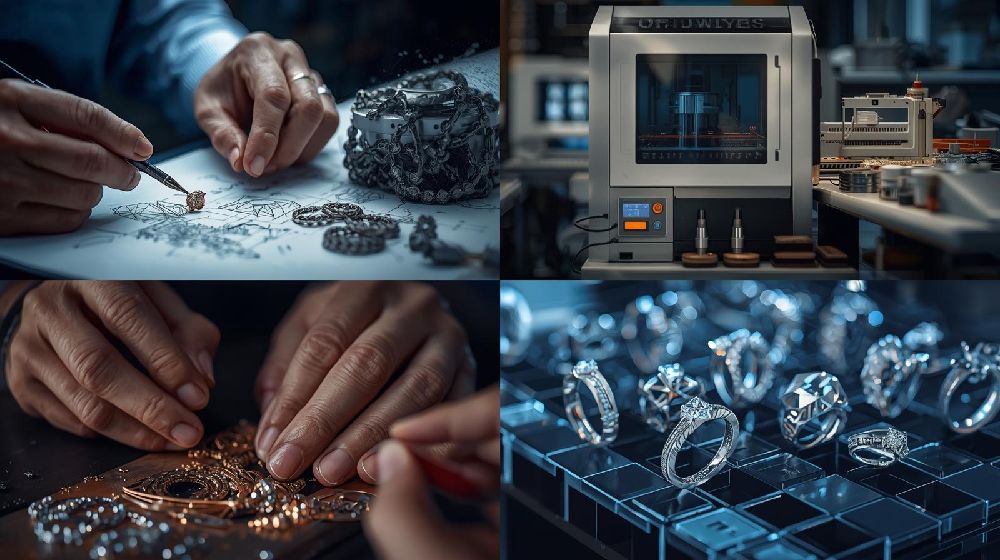
Jewelry has always been a symbol of artistry, heritage, and human touch. For centuries, skilled craftsmen shaped precious metals by hand, guided by experience and intuition. Today, that tradition is being reimagined through digital technology. The jewelry industry is undergoing a powerful transformation—one where craft meets code.
This digital evolution is redefining how jewelry is designed, produced, and perfected.
The Foundation: Traditional Craftsmanship
At its core, jewelry manufacturing began as a manual art. Artisans relied on hand tools, wax carving, and visual judgment to create each piece. While this approach produced timeless designs, it was time-intensive and limited in precision and scalability.
Yet, craftsmanship remains the soul of jewelry—technology doesn’t replace it, it refines it.
CAD Design: Turning Ideas into Digital Precision
Computer-Aided Design (CAD) marked the first major shift from hand sketching to digital modeling. Designers can now:
-
Create highly detailed 3D models
-
Adjust proportions with micron-level accuracy
-
Visualize complex structures before production
CAD ensures consistency while allowing creative experimentation without material loss.
CNC and Digital Manufacturing
Once designs are digitized, CNC (Computer Numerical Control) machining brings them to life. CNC technology allows for:
-
Precise metal cutting and shaping
-
Reproducible designs at scale
-
Complex geometries impossible by hand
This step bridges creative design with industrial precision.
3D Printing and Rapid Prototyping
3D printing has revolutionized prototyping in jewelry manufacturing. Designers can quickly produce wax or resin models to:
-
Test fit and comfort
-
Refine aesthetics
-
Reduce development time
Rapid prototyping accelerates innovation while maintaining design integrity.
Laser Technology: Accuracy Meets Art
Laser welding and laser cutting have introduced a new level of precision. These technologies allow:
-
Seamless joins
-
Minimal heat impact
-
Intricate detailing
Lasers ensure that delicate designs retain both beauty and strength.
Data-Driven Quality Control
Digital tools now monitor consistency and quality at every stage. Advanced measurement systems help:
-
Maintain uniform thickness and weight
-
Detect micro-flaws
-
Ensure durability standards
Quality control has shifted from visual inspection to data-backed assurance.
Automation with a Human Touch
Automation improves efficiency, but human expertise still guides final decisions. Skilled artisans oversee finishing, polishing, and setting—ensuring that technology enhances, not erases, craftsmanship.
The future lies in collaboration, not replacement.
Sustainability Through Digital Precision
Digital manufacturing reduces waste by optimizing material use and minimizing errors. Precise planning leads to:
-
Less metal loss
-
Lower rework rates
-
More responsible production
Technology supports both efficiency and environmental responsibility.
The New Era of Jewelry Making
Today’s jewelry is the result of code-driven precision guided by human creativity. Digital tools empower designers and manufacturers to create pieces that are lighter, stronger, more intricate, and more consistent than ever before.
This evolution reflects modern values—precision, sustainability, and innovation—without losing emotional and cultural significance.
Final Thoughts
From hand-crafted beginnings to digitally powered excellence, jewelry manufacturing has entered a new era. Craft and code now work side by side, shaping the future of fine jewelry.
The result is not less artistry—but smarter, stronger, and more refined craftsmanship.