

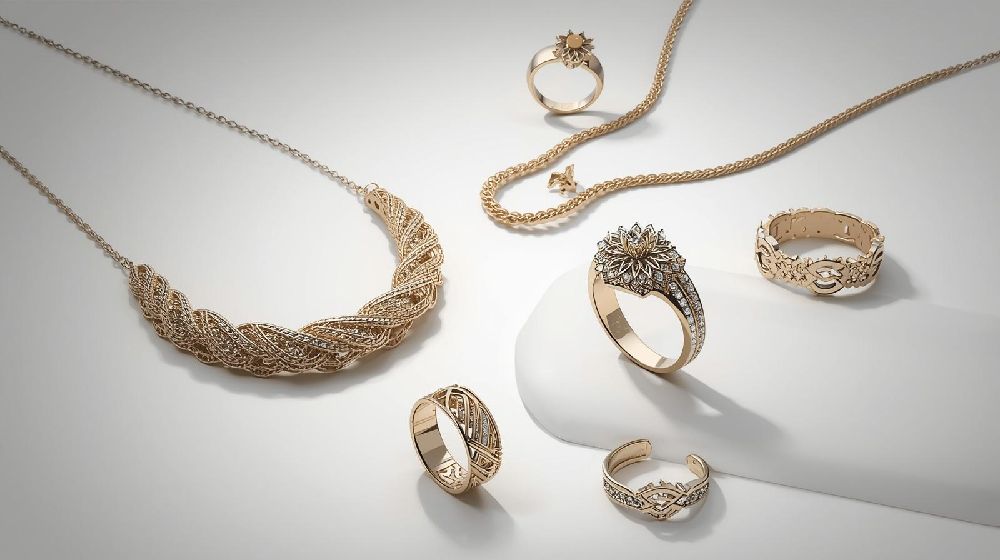
In jewelry creation, a beautiful sketch is only the beginning. While artistic vision drives design, true success lies in transforming that vision into a piece that can be consistently, efficiently, and flawlessly manufactured. Jewelry that is meant to be worn, sold, and scaled must go beyond aesthetics—it must respect materials, processes, and real-world wear.
Designing for manufacturing is where creativity meets discipline.
The Gap Between Concept and Creation
Many jewelry designs look stunning on paper but fail when introduced to production. This often happens when designs overlook structural limitations, material behavior, or manufacturing constraints.
Common challenges include:
-
Designs that are too thin to hold shape
-
Details that cannot be reproduced consistently
-
Stone settings that weaken structural integrity
-
Excessive complexity that increases production errors
Designing for manufacturing ensures that creativity survives the journey from sketch to showroom.
Understanding Materials Is Fundamental
Gold, silver, and alloys behave differently under stress, heat, and wear. A manufacturable design accounts for:
-
Metal softness and malleability
-
Minimum thickness for durability
-
Weight balance for comfort
Ignoring material behavior can result in deformation, breakage, or discomfort—regardless of how beautiful the sketch appears.
Structural Integrity Shapes Design Decisions
Jewelry must endure daily wear, not just visual inspection. Smart structural design ensures longevity without compromising elegance.
Key considerations include:
-
Reinforcing stress points in bangles and rings
-
Balanced proportions to prevent bending
-
Secure stone settings that protect both design and wearer
A manufacturable design looks effortless—but is engineered carefully.
Designing with Manufacturing Processes in Mind
Every production method has strengths and limitations. Designing jewelry with specific processes in mind improves efficiency and consistency.
For example:
-
CNC machining favors clean geometry and precise patterns
-
Casting requires appropriate draft angles and wall thickness
-
Laser welding allows delicate joins but demands accurate alignment
When designers understand manufacturing tools, designs become production-ready rather than production-problematic.
Scalability Without Compromising Quality
A design that works once is not enough—it must work repeatedly. Manufacturable jewelry allows:
-
Consistent output across batches
-
Uniform finishing and polishing
-
Reliable quality control
Scalability ensures that design excellence translates into commercial success.
Collaboration Between Designers and Manufacturers
The best jewelry emerges when designers and manufacturers collaborate early. Technical feedback during the design phase helps refine ideas without sacrificing intent.
This collaboration:
-
Prevents costly redesigns
-
Optimizes production timelines
-
Preserves artistic vision while ensuring feasibility
Manufacturing-aware design is not restrictive—it is empowering.
Technology as a Design Partner
Modern jewelry design benefits from digital tools that bridge creativity and production.
Technologies like:
-
3D modeling for accuracy
-
Prototyping for real-world testing
-
Simulation tools for stress analysis
These tools ensure that designs are beautiful, durable, and ready for production.
Craftsmanship Still Matters
Even in advanced manufacturing, skilled craftsmanship remains essential. Hand-finishing, inspection, and refinement bring warmth and character to technically sound designs.
Manufacturable jewelry respects both machines and artisans.
Conclusion: Where Design Becomes Reality
Designing jewelry that is meant to be manufactured is about thinking beyond the sketch. It is about understanding materials, respecting processes, and anticipating real-world use.
When design and manufacturing align, jewelry becomes more than art—it becomes reliable, wearable, and timeless.