

As sustainability becomes a global priority, the jewelry industry is undergoing a powerful transformation. At the center of this shift is circular gold—a responsible approach where gold is reused, refined, and reborn without compromising quality or purity. Unlike many materials, gold is infinitely recyclable, making it a cornerstone of sustainable luxury and modern jewelry manufacturing.
What Is Circular Gold?
Circular gold refers to gold that is recycled from existing sources—such as old jewelry, industrial scrap, electronic waste, or production leftovers—and refined back to its pure form. Instead of extracting new gold from the earth, manufacturers reintroduce existing gold into the production cycle, creating a closed-loop system that minimizes waste and environmental impact.
Why Gold Is Perfect for Circular Manufacturing
Gold has a unique advantage: it never loses its intrinsic properties. When recycled and refined correctly, gold retains the same purity, strength, and luster as newly mined gold. This makes it ideal for sustainable manufacturing without sacrificing quality, design, or durability.
Key advantages include:
-
Infinite recyclability without degradation
-
Consistent purity after refining
-
No compromise in strength or appearance
How Recycled Gold Enters Modern Jewelry Production
1. Collection & Sorting
Recycled gold is sourced from outdated jewelry, production scrap, and unused inventory. These materials are carefully sorted based on karat and alloy composition.
2. Refining to Pure Gold
Advanced refining processes remove impurities and alloys, converting recycled gold back into high-purity gold—often reaching 999 or 995 fineness.
3. Re-Alloying for Jewelry Strength
Pure gold is then alloyed precisely to achieve desired karats (22K, 18K, 14K), balancing beauty, durability, and wearability.
4. Precision Manufacturing
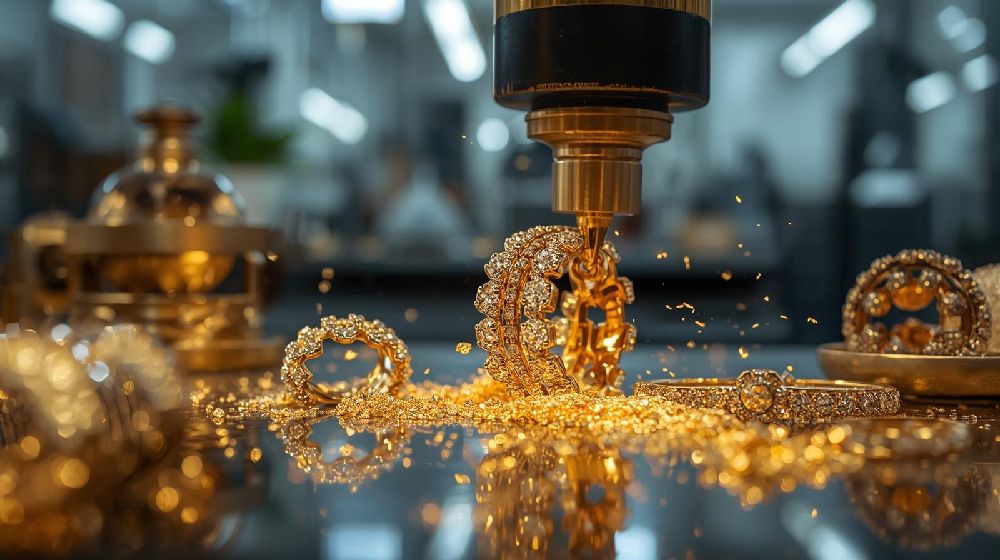
Using modern techniques like CNC machining, laser welding, and CAD design, recycled gold is transformed into lightweight, high-precision jewelry with minimal material loss.
Zero-Waste Manufacturing: Every Micro Gram Matters
Leading manufacturers treat gold dust, filings, and excess metal as valuable assets. Advanced recovery systems ensure that every micro gram of gold is captured and reused, significantly reducing waste and cost while increasing efficiency.
This zero-waste approach aligns sustainability with smart business practices.
Environmental Benefits of Circular Gold
-
Reduced Mining Impact: Less land disruption and lower water consumption
-
Lower Carbon Footprint: Recycling uses far less energy than mining
-
Minimal Toxic Waste: Reduced use of harsh chemicals
-
Ethical Sourcing: Eliminates concerns tied to mining conditions
Why Consumers Are Choosing Recycled Gold Jewelry
Modern buyers want transparency, responsibility, and purpose behind their purchases. Circular gold offers:
-
The same purity and value as mined gold
-
A smaller environmental footprint
-
Ethical and responsible sourcing
-
Long-term investment value
For today’s conscious consumers, recycled gold is not a compromise—it’s an upgrade.
Circular Gold Meets Modern Design Trends
Sustainable gold pairs naturally with:
-
Minimalist and lightweight designs
-
CNC-crafted precision jewelry
-
Laser-welded seamless finishes
-
Custom and made-to-order production
These methods further reduce material waste while enabling innovative, contemporary aesthetics.
The Future of Jewelry Is Circular
Circular gold is redefining luxury—not as excess, but as responsibility with refinement. As technology, transparency, and consumer awareness continue to grow, recycled gold will become the standard rather than the alternative.
Modern jewelry manufacturing proves that true luxury isn’t just how gold looks—but how thoughtfully it’s made.